
HUNDY
ELECTRICAL
Smoke Alarm Compliance & Installation
IS YOUR HOME READY FOR 2027?
⚠ By law, all Queensland homes must have interconnected photoelectric smoke alarms by 1 January 2027.
This applies to every existing private home, townhouse, unit and manufactured home in Queensland — regardless of age, and even if you have no plans to sell or rent. Source: Queensland Fire Department / qld.gov.au.
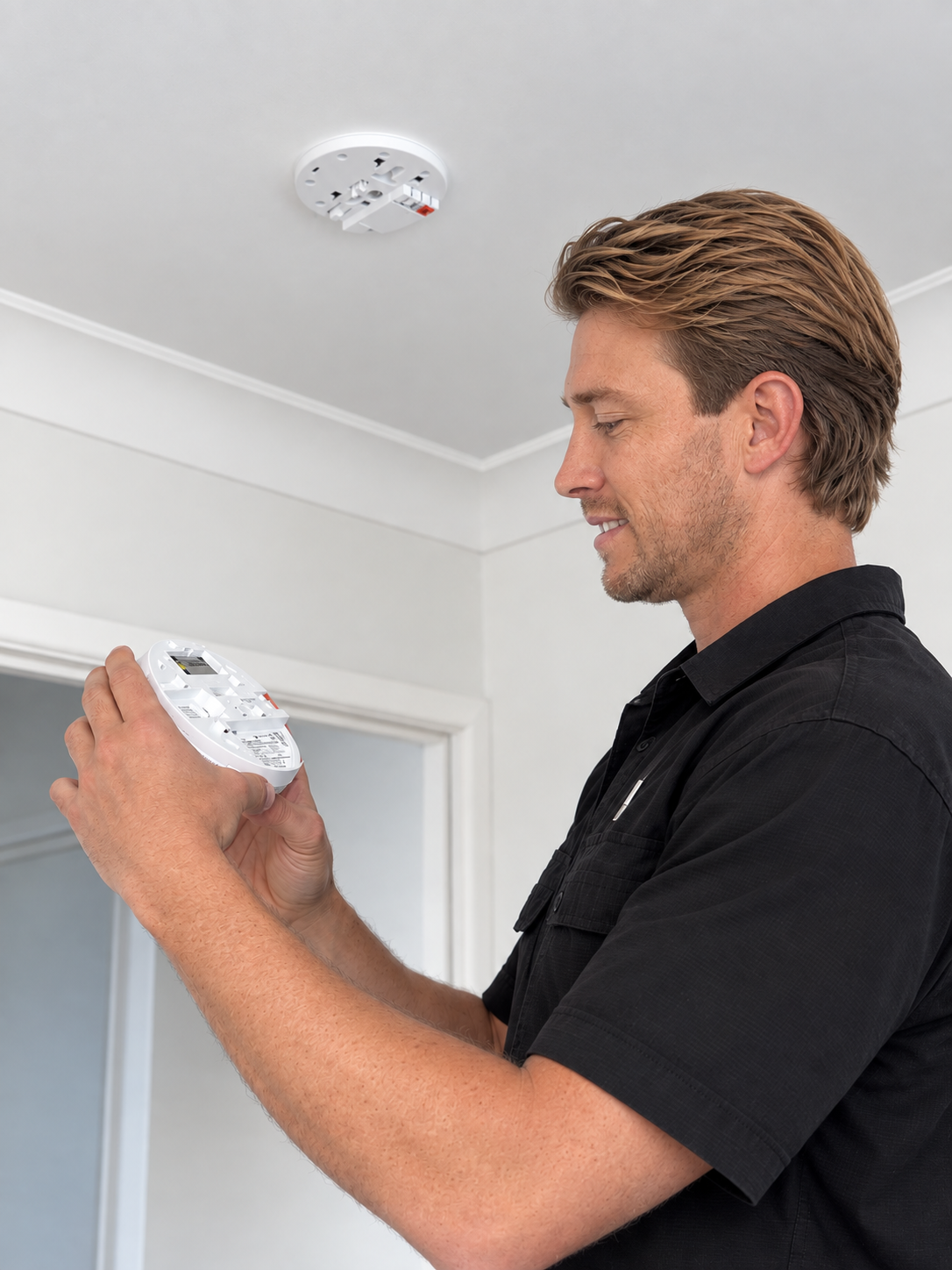
What a Compliant Smoke Alarm System Looks Like
To meet the standard, smoke alarms must:
• Be photoelectric - not ionisation type
• Be interconnected with every other alarm in the home, so when one activates, they all sound
• Comply with Australian Standard AS 3786:2014
• Be hardwired to mains power with battery back-up (installed by a licensed electrician), or be a photoelectric alarm with a non-removable 10-year battery
Where Alarms Are Required
For private homes, townhouses and units, alarms must be installed:
• On each storey
• In each bedroom
• In hallways that connect bedrooms to the rest of the dwelling
• If there's no hallway, between the bedroom and the rest of that storey
• If a storey has no bedrooms, at least one alarm in the most likely path of travel to exit
Why This Deadline Catches Almost Everyone
1 January 2017
New builds & substantial renovations require hardwired, interconnected photoelectric alarms.
1 january 2022
Homes being sold or a new tenancy started must be upgraded to compliant alarms before settlement or lease start.
1 january 2027
Every remaining home in Queensland — including owner-occupied homes with no sale or lease in progress — must be compliant.
Smoke alarms must comply with AS 3786:2014, be photoelectric, and be interconnected with every other alarm in the dwelling. Hardwired installations must be carried out by a licensed electrician. A Certificate of Testing and Compliance is issued for hardwired installations under section 227 of the Electrical Safety Regulation 2013. Information on this page reflects Queensland Fire Department guidance current as at September 2026 — always confirm your specific obligations at qld.gov.au or fire.qld.gov.au.
OUR PROCESS
Upgrade or New Install
1. Assess
We check what's already installed against the current standard — alarm type, age, interconnection and placement.
2. Quote
A fixed, upfront price for what your home actually needs — full hardwired upgrade, 10-year battery units, or a mix, depending on your home and budget.
3. Install
Licensed electrical installation of interconnected photoelectric alarms in every required location, done in a single visit for most homes.
4. Certify
Hardwired installations come with a Certificate of Testing and Compliance under the Electrical Safety Regulation 2013 — proof of compliance if you sell, lease, or simply want it on file.
Upgrade or New Install — Which Applies to You?
Upgrading existing alarms
Most Gold Coast homes built before 2017 have older, non-interconnected or ionisation alarms. If yours haven't been touched since you moved in, an upgrade to interconnected photoelectric alarms is almost certainly what's needed before 2027.
We'll assess what you've got, explain exactly where it falls short of the new standard, and upgrade you to a fully interconnected photoelectric system — hardwired or 10-year battery, whichever suits your home — so every alarm in the house sounds together, every time.
New installation
Building, renovating, adding a room or starting fresh because there's simply nothing reliable in place?
We'll design and install a complete interconnected smoke alarm system from the ground up. That means the right number of alarms, correctly placed in every bedroom, hallway and level of the home, wired and tested by a licensed electrician, and backed by a compliance certificate so you know it's done right the first time.
Smoke Alarm information & FAQS
-
Yes. From 1 January 2027, the requirement for interconnected photoelectric smoke alarms applies to every existing private home in Queensland, regardless of whether you're selling, renting, or simply living in it.
-
Compliant alarms are photoelectric (not ionisation), interconnected with every other alarm in the home, and marked AS 3786-2014 on the body of the unit. If your alarms predate 2017 or you're not sure, we can check them for you.
-
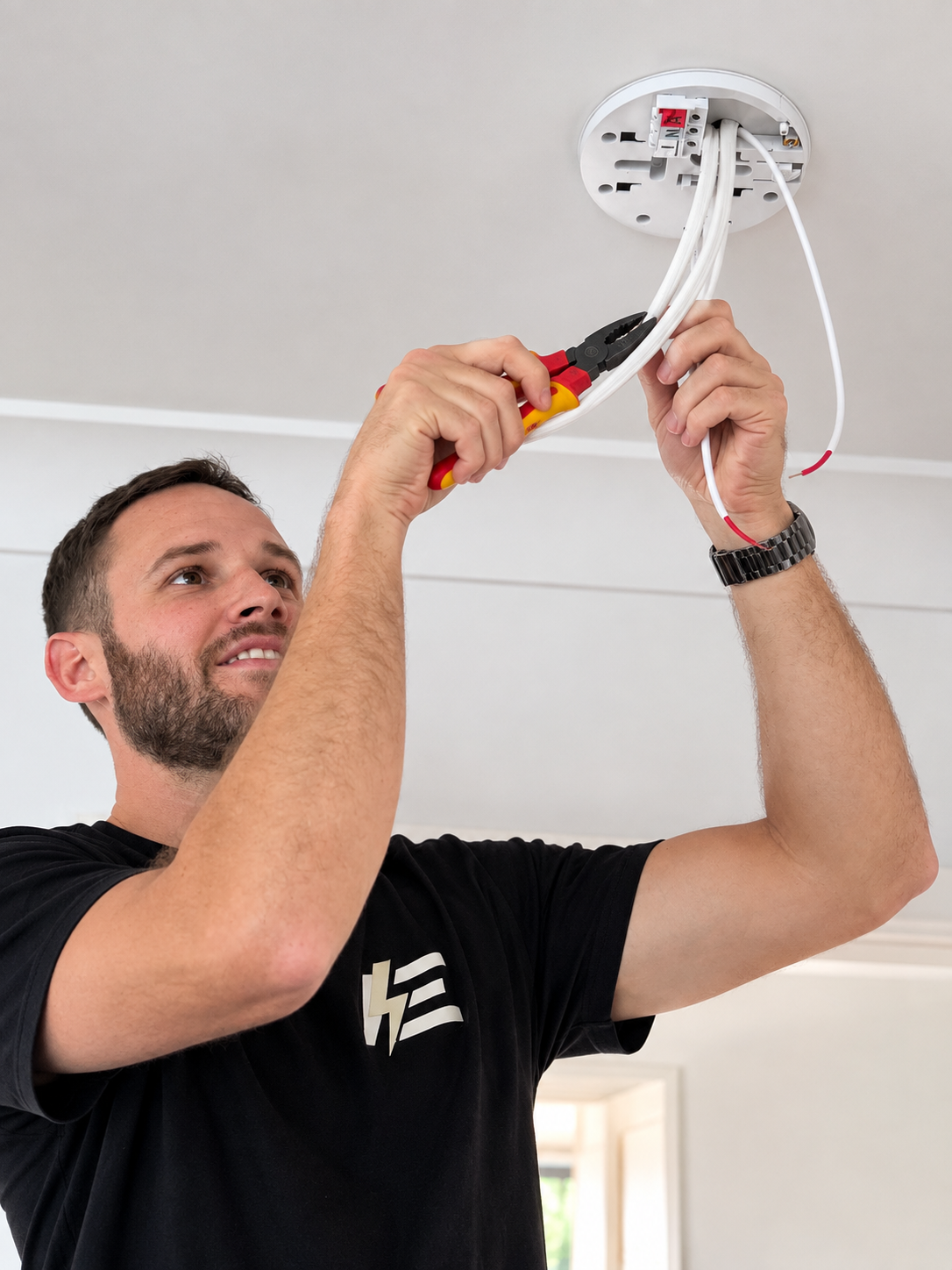
Hardwired alarms run off mains power with a battery back-up and must be installed by a licensed electrician. Photoelectric alarms with a non-removable 10-year battery are also compliant and can be installed without an electrician, though many homeowners prefer a licensed install for correct interconnection and placement.
-
It depends on how many alarms your home needs and whether you're upgrading existing wiring or starting fresh. Send us your address and floor plan (or we can inspect on site) and we'll give you a fixed, upfront price.
-
Yes - hardwired installations come with a Certificate of Testing and Compliance, which you can keep on file or provide if you sell or lease the property later.
-
The legislation allows for infringement notices for non-compliance. Beyond the legal risk, interconnected photoelectric alarms give a genuinely earlier warning in a fire than older, non-interconnected units - it's worth doing regardless of enforcement.
Send through your address, recent photos or your home plans/ layout and we can provide an initial quote.
Prefer an in-home site visit? We can arrange a free quote at a time that suits you.
No pressure. No obligation. Just helpful advice.